
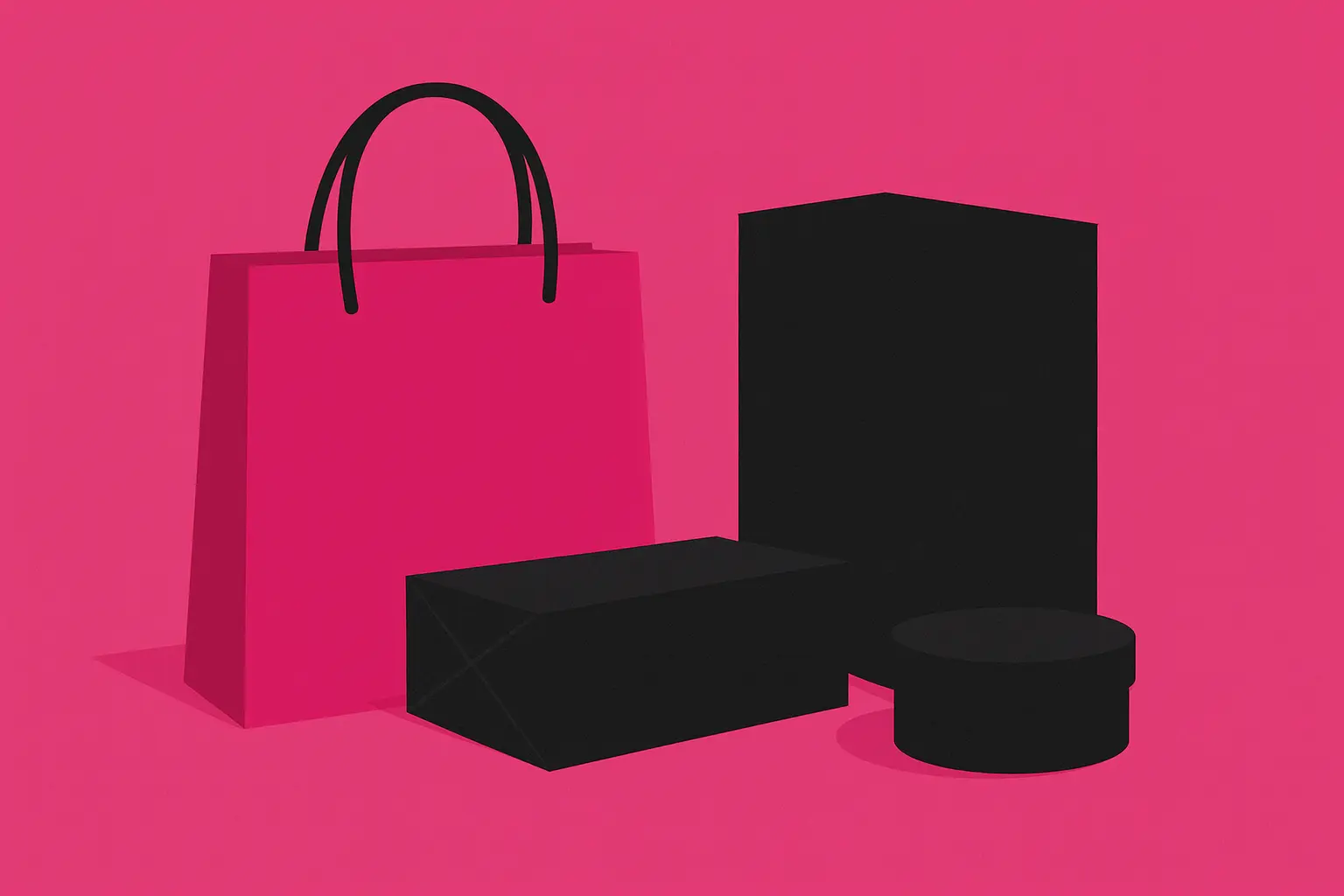
Effective packaging captures attention, removes friction from decision-making, and supports brand recognition across the shelf, palette, cold case, or screen. And since winning in retail is your goal, understanding the role of packaging design on performance marketing is non-negotiable.
Today, we’ll break down the specific roles packaging plays in performance marketing, focusing on:
- Packaging design as a driver of consumer attention and conversions
- Packaging as a builder of brand identity and brand recognition
- Packaging as a tool for consumer engagement and behavioral influence
- Sustainable packaging as a performance differentiator
- Packing’s influence on digital performance marketing
Packaging design attracts consumer attention and drives conversion.
One of the main roles of pack design is how quickly it can steal attention and turn it into a sale.
1. Visibility and shelf impact drive trial.
A lot of buyers shop on autopilot. They skim the shelves, rarely studying the labels and products behind them. Therefore, if your package design doesn’t break that pattern in a matter of seconds, you might as well consider your product invisible.
Effective packaging design starts with visibility. Strong color blocking, clear focal points, and sharp contrast pull the eye in cluttered sets. Distinctive shapes and structures help the pack stand out even when only a sliver is visible on a shelf or in a fridge door.
Keep in mind, this is not about “looking nice.” It is about earning a first glance and turning it into a first reach. Because when the package consistently wins the first reach, units per store per week go up.
2. Clear product information reduces decision friction.
Even when the consumer picks up the pack, the clock is still ticking. While it ticks, they want an answer to these three questions fast:
- What is it?
- Is it for me?
- Why this one and not the other?
Front-of-pack hierarchy does the heavy lifting here. The product name, category, and primary benefit must be obvious and should ladder up to a simple story.
If shoppers have to hunt for flavor, size, or key benefit, you pay in lost conversions.
On the other hand, when product information is clear and concise, decision time drops, and conversions rise. This is why before you engage in performance marketing, brands should work with a data-driven packaging design agency to ensure their #1 marketing asset is optimized for performance.
3. Packaging is an always-on performance asset.
Ads are temporary. But your product packaging design is one asset that is permanent:
- At shelf
- In the pantry or bathroom
- In the feed as user-generated content
- In thumbnails on e-commerce platforms
That means the pack is doing work long after the marketing campaigns end.
A great pack maintains branding, anchors recall from past exposure, and reinforces the promise every time the consumer opens the product.
Treating packaging as always-on media changes how you approach it. You’re not designing a wrapper. You’re creating an asset that must earn attention, drive choice, and reinforce behavior every single day.
Packaging as a builder of brand identity and brand recognition
Here, packaging does the slow, compounding work of making your brand easy to spot and hard to forget.
1. Packaging is the core expression of brand story and brand image
For most CPG brands, the package is the brand. It’s the most frequent physical interaction a consumer has with you, which makes it the most powerful asset expressing brand identity, brand story, and positioning.
Color, typography, iconography, and layout build brand image over time. When these elements are consistent and distinctive, the brand can be recognized from a distance or in a split-second scroll.
2. Visual systems strengthen branding strategy.
Branding strategy is not just decks and words. It lives or dies on the front and back of the pack.
When the visual system is fragmented, you pay for it.
The browser sees a messy block on the shelf. Shoppers mispick or give up. New products fail to “belong” to the master brand.
A coherent visual system across SKUs and formats makes navigation simple. Shoppers can find their usual variant, explore new ones, and still feel anchored in the same brand world.
That continuity gives you room to innovate while protecting recognition, brand loyalty, and brand value.
3. Material, form, and tactile signals influence perception.
Packaging material, structure, and tactile finishes all signal quality, price point, and intended usage.
Premium packaging with thoughtful weight, closure, and texture raises perceived value before the product is even tried. Luxury packaging leans heavily on these cues to justify higher margins and gifting behavior.
Furthermore, custom packaging structures can trigger functional trust. A secure pump, a satisfying closure click, or a travel-safe lid all influence consumer perception as much as any headline claim.
Packaging design is a tool for consumer engagement and behavioral influence.
Packaging nudges behavior, deepens interaction, and keeps the consumer coming back, so it’s imperative to.
Creative design packaging drives interaction
Well-designed packaging doesn’t just get noticed. It creates customer loyalty.
- Peel-to-reveal message.
- Unexpected inside print.
- Structural twist that doubles as a serving solution.
Creative packaging design prompts potential customers to spend a few extra seconds with the product. It deepens memory, improves understanding, and increases the chances of trial.
While to some it may appear gimmicky, this kind of creativity drives engagement that supports the marketing strategy, resulting in more trial, more recall, and more conversions.
Packaging influences consumer behavior and perception.
One thing everyone in this line of business should know is that consumers read design even when they don’t consciously analyze it. Think about it…
Minimal layouts signal simplicity and purity.
Dense information blocks can signal efficacy or complexity.
Color choices, photography style, and iconography all push behavior in specific directions.
So, to end up with an effective packaging, you have to start from real consumer behavior. You have to understand:
- How they shop.
- What they fear.
- What they want to feel when they put the product in their basket or on their bathroom shelf.
When design is aligned with those drivers, products start flying off the shelves.
Smart packaging and digital extensions offer a ton of value.
QR codes, NFC tags, and other smart packaging tools extend the experience into digital journeys. Scan for how-to content, deeper product information, rewards, or re-order links. These features turn packaging into a direct bridge between offline purchase and digital marketing.
The value here is (i)measurable. You can track scans, visits, sign-ups, and repeat orders that originate directly from the pack, giving your packaging a place in the performance stack, not just the brand stack.
Sustainable packaging is a performance differentiator.
If your packaging translates sustainability into real commercial advantage, you’re in for a treat.
Eco-friendly packaging increases brand consideration.
Sustainability hasn’t been just a nice story for years. For an immense segment of consumers, it is a decision filter.
Eco-friendly packaging signals that your brand understands environmental impact and is taking responsibility. When it’s credible and clearly communicated, it can justify price, defend margin, and open doors in retailers with strict sustainability expectations.
Also, for some, this may be the main reason your pack is considered at all.
Sustainable packaging solutions build trust.
Brand trust becomes evident when repeat purchases, openness to new launches, and willingness to recommend become the norm. Also, all of these are performance metrics when you think about it.
Packaging choices either support them or undermine them. There is no neutral position here.
In this particular case, one can say with great certainty that when a brand consistently uses sustainable packaging solutions that match its stated values, consumer trust grows. When claims and choices don’t match, that same trust erodes.
Packaging design influences digital performance marketing, too.
In this role, packaging decides how well you convert impressions into clicks, carts, and repeat orders online.
Great pack design wins at thumbnail scale.
Depending on your product, some consumers will first meet your pack as a thumbnail. Whether it’s Amazon, Instacart, or your own site, sometimes, all your ideal customer sees is a tiny square.
If your product packaging design doesn’t read at that size, you lose clicks before the PDP even loads.
What this means is that simplified layouts, bold shapes, and high-contrast elements must carry the brand and product story in very little space. In other words, the same clarity that works at the shelf also has to work when reduced to pixels.
Packaging is (almost always) the primary creative in digital marketing.
A lot of (read: most) CPG ads lead with the pack.
Now, one might think that that’s laziness. It’s not. It’s recognition that the pack is the most recognizable visual asset the brand has.
When the packaging is strong, it anchors campaigns across all channels, including social media, retail media, email, and beyond.
Unboxing experiences matter.
The job isn’t done at checkout.
Unboxing is the first in-hand moment, so if repeat sales are your goal, it can’t disappoint.
Good packaging turns that moment into an affirmation of the purchase. Clean presentation, easy (and intuitive) opening, and thoughtful details build long-lasting brand loyalty.
How? It’s simple, really.
Satisfied customers come back, review more positively, and talk more loudly. That improves retention, lowers acquisition costs, and steadily grows revenue.
Packaging design matters. Make it work.
When brands treat packaging as a measurable asset in the performance marketing mix, they gain an (unfair) advantage. They gain the important performance lever that improves acquisition, conversion, and loyalty across every channel.
What more could one ask for?