
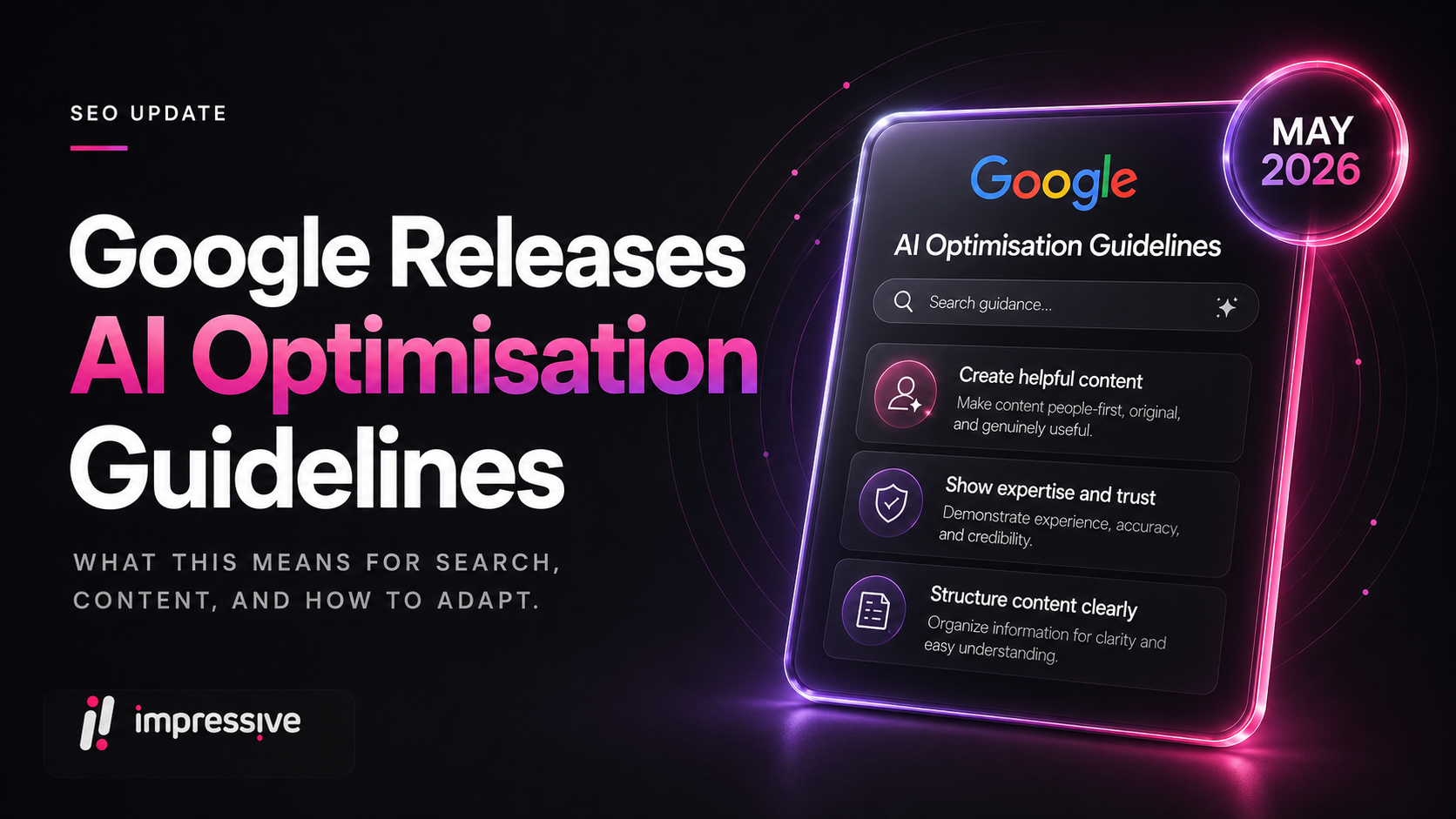
Google released its official guide to optimising for generative AI features in Search on May 15, 2026. The document covers best practices for appearing in AI Overviews, AI Mode and future agentic search experiences.
The biggest takeaway is the one that will frustrate anyone hoping for a secret playbook. Google’s guidance boils down to this. The same SEO fundamentals that have always worked continue to work. Create useful content. Maintain clean technical structure. Earn trust from credible sources. That’s it. That’s the guide.
Impressive’s SEO Director Rachel Harvey has been making this point for months. “The fundamentals of SEO and GEO are the same. Google has now said it out loud. If your technical foundations are solid, your content adds genuine value and your authority signals are credible, you’re already optimising for AI search. The brands that treated GEO as some entirely new discipline have been overcomplicating it.”
Google Says GEO Is Still SEO
The guide addresses the terminology directly. Google acknowledges that terms like “AEO” (answer engine optimisation) and “GEO” (generative engine optimisation) exist across the industry, then clarifies its position. From Google’s perspective, optimising for generative AI search is optimising for the search experience, and therefore still SEO.
That distinction matters. It means Google’s AI features, including AI Overviews and AI Mode, pull from the same index and ranking systems that power traditional search. The content that ranks well in regular search has the strongest chance of appearing in AI-generated responses. There is no separate AI algorithm to game. There is no hidden ranking factor. The same systems drive both.
For businesses already investing in strong SEO services, this is validation that the work carries forward into AI search without requiring a fundamental strategic overhaul.
What Google Recommends (and What It Doesn’t)
The guide organises its recommendations into three categories. Content quality, technical structure and local/ecommerce optimisation. Here is what matters most.
Content That AI Systems Actually Want to Reference
Google’s guide emphasises non-commodity content. That means original perspectives based on first-hand experience, expert-led insights that go beyond common knowledge, and well-organised pages that humans find useful.
The guide uses a clear example to illustrate the difference. A generic post titled “7 Tips for First-Time Homebuyers” is commodity content. Anyone could produce it. An article titled “Why We Waived the Inspection and Saved Money” provides a unique, experience-based perspective that AI systems find more useful when constructing responses.
The practical implication is straightforward. If your content team is producing pages that restate what already exists on the internet, those pages are unlikely to earn AI citations. Businesses that invest in content writing with original data, practitioner insights and first-hand experience give AI systems a reason to reference their work over the thousands of generic alternatives.
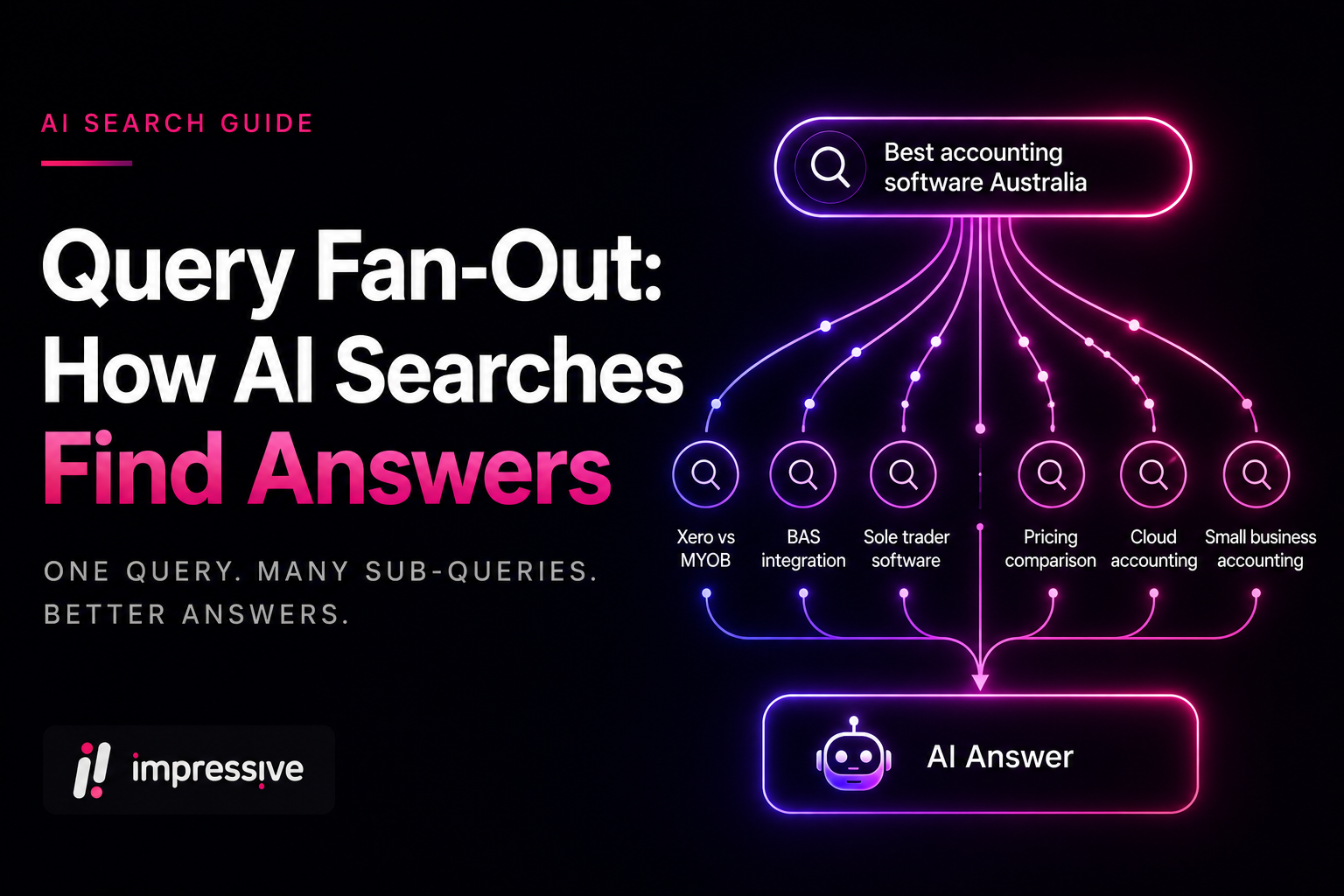
Google also warns against creating separate content for every possible search variation. Producing pages specifically to capture “fan-out queries” (the related queries AI systems generate behind the scenes) violates Google’s scaled content abuse spam policy. AI systems understand synonyms and general meaning. You don’t need to publish a separate page for every long-tail variation of a keyword.
Technical Structure Still Matters
The guide confirms that all existing technical SEO best practices remain relevant. Pages need to be crawlable, indexable and eligible for snippets to appear in AI features. JavaScript needs to follow Google’s JS SEO guidelines. Page experience, including speed, mobile usability and clean layout, still influences performance.
One interesting clarification. Google says you don’t need perfectly semantic HTML. The web in general is not valid HTML, and Google can understand it. That said, semantic HTML helps screen readers and browser agents parse content, which becomes increasingly important as agentic AI experiences grow.
The guide also confirms that structured data is not required for AI search. There is no special schema.org markup to add for AI Overviews. However, structured data remains valuable for rich results in traditional search and should stay part of your overall strategy.
What This Means for GEO Strategy
Google’s guide reinforces something we’ve been saying at Impressive since we launched our AI SEO service. GEO is not a separate discipline from SEO. It is the same discipline applied with greater precision.
The businesses that perform well in AI-generated responses are the ones with clean technical foundations, original content that adds value beyond what already exists, and credible authority signals from trusted sources. Those are the same businesses that perform well in traditional search.
Where the work does expand is in measurement. Traditional SEO measures rankings, traffic and conversions. AI search optimisation adds citation frequency, share of model voice, entity recognition and content retrieval rates. The fundamentals produce the results. The measurement framework captures them.
The guide also opens the door to agentic search. Google mentions browser agents that can access websites to perform tasks on behalf of users, like booking reservations or comparing product specifications. This is early-stage, but it signals where search is heading. Websites with clean structure, semantic HTML and accessible design will have an advantage as these experiences develop.
The Brands That Win From Here
Google’s AI optimisation guide is good news for businesses that have been doing SEO properly. The fundamentals haven’t changed. The payoff has expanded.
Content that earns trust from humans earns trust from AI systems. Technical foundations that support traditional search also support AI retrieval. Digital PR and credible mentions strengthen authority signals that both ranking systems and AI models assess when selecting sources.
The brands that act on this clarity will strengthen their positions across traditional and AI-driven search. The brands that keep chasing AI-specific hacks will keep chasing their own tail.