
Traditional SEO metrics miss a growing share of search visibility. Rankings and click-through rates tell you how content performs on a results page. They do not tell you whether AI systems reference your brand when generating answers.
Generative engine optimisation (GEO) addresses that gap. As AI-driven search expands across Google AI Overviews, ChatGPT, Perplexity and Gemini, the geo metrics you track need to reflect where discovery actually happens. This guide covers the signals that matter, how to track geo performance across platforms, and what to do with the data.
Why Traditional SEO Metrics No Longer Tell the Full Picture
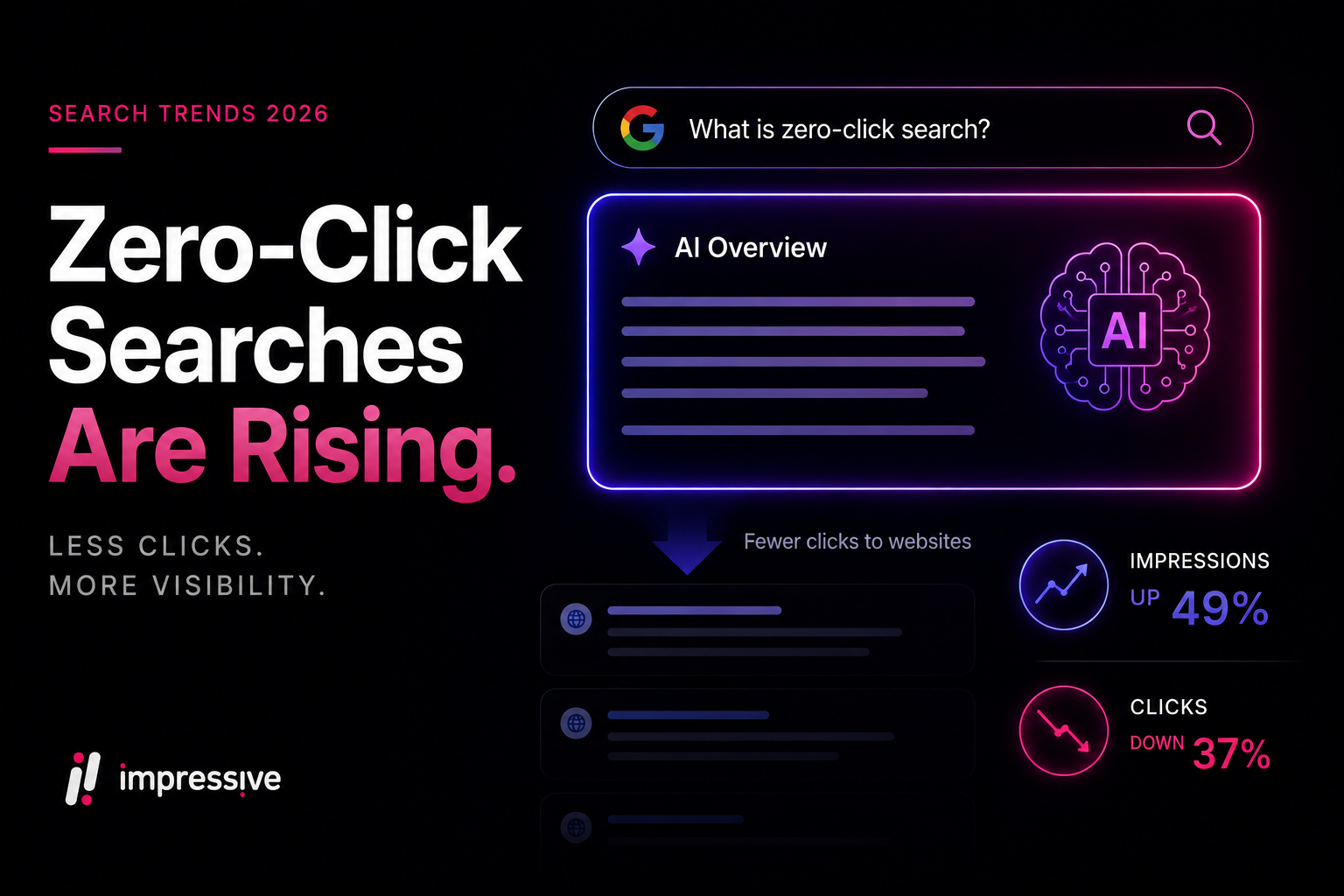
AI Overviews now appear in over 25 percent of Google searches. Roughly 83 percent of those queries end without a click. AI Mode sessions push that number even higher, with 93 percent of sessions ending before a user visits an external website.
That means a growing share of your audience forms opinions, compares options and shortlists brands inside AI-generated responses. If your measurement framework only captures rankings and organic traffic, you are missing the majority of that influence.
Businesses investing in broader SEO services now need to layer geo metrics on top of traditional reporting to understand how visible their brand is across the full search landscape. This depth of data is particularly critical when tracking performance across highly competitive regional hubs, making it essential for brands utilising targeted SEO services across Melbourne, Sydney, Brisbane, Adelaide, and Perth to precisely measure their localised impact.
The 8 GEO Metrics That Matter Most
Search Engine Land published a detailed framework for GEO measurement in 2026 that outlines eight core metrics. Here is how each one applies in practice.
1. AI Citation Frequency
How often AI systems cite your brand, website or content when generating answers. This is the most direct measure of whether generative search considers your content useful enough to reference.
Track citations across Google AI Overviews, AI Mode, ChatGPT, Perplexity and Gemini. Break the data down by topic rather than domain alone. A brand may appear frequently for one subject and not at all for another.
2. Share of Model Voice
How often your brand appears in AI-generated responses compared to competitors. This is the GEO version of share of voice.
Calculate it by running a consistent set of prompts and measuring the percentage of responses that mention your brand versus competitors. In AI search, the consideration set is compressed. Users see three recommended options rather than ten blue links. Relative presence matters more than absolute count.
3. Answer Inclusion Rate
How often your owned content contributes to an AI-generated answer, regardless of whether users click. A brand can appear in a response without its content being the cited source. And a page can inform an answer without the brand name appearing at all.
Track inclusion across informational, comparison and decision-stage prompts. Content with clear definitions, comparison tables and direct answers tends to perform better because AI systems can extract and reuse it easily.
4. Entity Recognition and Authority
How accurately AI systems understand who your brand is, what it does and which topics it should appear for. Generative systems interpret entities and relationships, not keywords.
Strong entity recognition means AI connects your brand to the right products, people, locations, industry categories and use cases. Schema markup, Knowledge Panel presence and consistent structured data across your website strengthen these signals. Teams running AI SEO programmes track entity accuracy as a core performance indicator.
5. Sentiment in AI Responses
How AI systems describe your brand when they mention it. Tracking mentions alone is not enough. You need to know whether responses frame your brand as credible, outdated, expensive, innovative or niche.
Monitor recurring adjectives, incorrect comparisons, outdated product details and hallucinated features. AI-generated answers shape perception before the user ever reaches your site, which makes sentiment a brand management issue as much as an SEO one.
6. Prompt Coverage
How many relevant prompts surface your brand. This is the GEO equivalent of keyword coverage, but prompts are more conversational and intent-rich.
A strong prompt set goes beyond “best [category]” queries. It includes problem-aware prompts, comparison prompts, role-specific prompts and follow-up prompts. The wider your prompt coverage, the more entry points your brand has across AI-driven research.
7. Content Retrieval Success Rate
How often AI systems actually pull from your owned content when answering relevant prompts. Even strong content can fail to appear if it is not crawlable, well-structured or regularly updated.
Evaluate crawlability, internal linking, schema markup, heading structure, content freshness and AI crawler access rules. Technical gaps reduce retrieval rates regardless of content quality. Businesses running SEO in Sydney or SEO in Brisbane see this play out when local content lacks the structural clarity that AI systems need to extract and reference it.
8. Conversion Influence After AI Interaction
How visibility in AI-generated responses contributes to downstream business outcomes. The connection is rarely direct. A user may see your brand in a ChatGPT answer, search your name on Google the following day and convert through a retargeting ad a week later.
Track AI referral traffic, branded search lift, direct traffic changes, assisted conversions and lead quality from AI-referred sessions. Early data suggests AI search visitors convert at significantly higher rates than traditional organic visitors, even though volume remains smaller.
How to Track GEO Performance in Practice
Understanding how to track geo performance requires a combination of tools, manual testing and analytics configuration.
Emerging GEO platforms like Semrush AI Toolkit, SE Ranking AI Visibility Tracker and Profound now surface citation data, sentiment analysis and competitive visibility across AI platforms. The category is maturing quickly.
Manual prompt testing remains valuable for building a baseline. Create a controlled set of prompts by topic, funnel stage and geography. Run them consistently across AI platforms and track whether your brand appears, how it is described and which competitors show up alongside it.
Analytics configuration through GA4, server logs and CRM data helps identify traffic and conversions from AI referrers. Tag known AI sources including ChatGPT, Perplexity and Gemini. Treat the data as directional rather than complete, since many AI-influenced journeys appear as direct or branded traffic.
Search Console still matters. Impressions reveal whether content surfaces in AI Overviews. Query data highlights where AI features absorb demand and where branded search is shifting.
How to Track GEO Visibility Across Your Priority Topics
Learning how to track geo visibility starts with defining the topics you want AI systems to associate with your brand. Pick five to ten core subjects. For each, map prompts across the user journey.
Then organise your tracking into four categories.
Visibility tracks where you show up. Citation frequency, share of model voice, prompt coverage and answer inclusion rate.
Accuracy tracks how you are represented. Sentiment, message consistency, hallucination rates and competitive framing.
Technical health tracks whether your content can be retrieved. Schema coverage, crawlability, freshness, entity consistency and AI crawler access.
Business impact tracks whether visibility drives outcomes. AI referral traffic, assisted conversions, branded search lift, direct traffic movement and lead quality.
Review these signals together. Use them to decide what to update, expand or deprioritise. Connect the framework to business goals rather than reporting for its own sake.
What This Means for Your 2026 Strategy
GEO metrics close the measurement gap between traditional SEO and AI-driven search. The brands that track citation frequency, entity authority, prompt coverage and conversion influence will understand where they are visible and where they are losing ground.
The brands that only track rankings and traffic will continue making decisions based on an incomplete picture while competitors gain positioning inside the AI responses their audience actually reads.
Start with a baseline. Define your priority topics. Run the prompts. Track the signals. Adjust the content. The advantage compounds for teams that act on these geo metrics consistently rather than waiting for perfect tools to arrive.